 Announcement
Let's Talk Fraud!
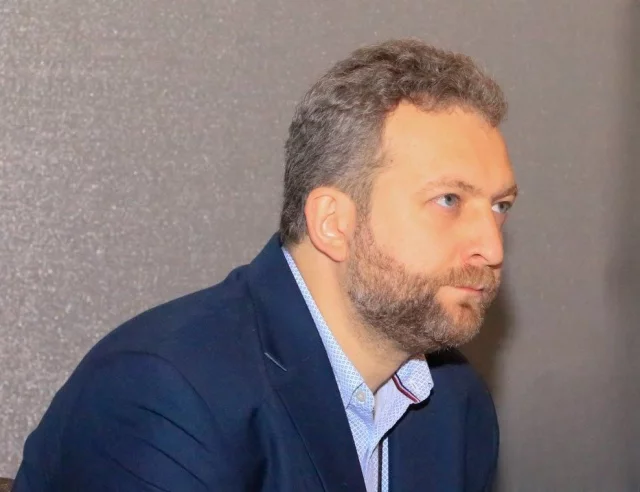
How Let's Talk Fraud began: personal experience in fraud prevention, data, analytics and cyber, shared to help others navigate the field.
November 1, 20222 min read
1 article
Announcement
How Let's Talk Fraud began: personal experience in fraud prevention, data, analytics and cyber, shared to help others navigate the field.
 ImplementationSeries · Part 6
Newest article
Before procuring fraud AI, assess four foundations: representative data, trustworthy labels, accountable people and operational processes supported by dependable technology.
 Implementation
Series · Part 6
Implementation
Series · Part 6
Before procuring fraud AI, assess four foundations: representative data, trustworthy labels, accountable people and operational processes supported by dependable technology.
 Fraud Analytics
Series · Part 4
Fraud Analytics
Series · Part 4
Behavioral biometrics, account behavior and device intelligence answer different questions. Understand where each helps, where it falls short and why a familiar user does not prove a safe payment.
 GCC
GCC
Stronger authentication can reduce account-takeover risk without confirming genuine payment intent. GCC controls and UK loss data illustrate the different challenge of authorized scams.
 Implementation
Series · Part 5
Implementation
Series · Part 5
Why a broad capability wish list is not a phase-one scope, how readiness constrains delivery, and when customization creates a lasting ownership burden.
 Implementation
Series · Part 4
Implementation
Series · Part 4
Turn stakeholder wishes into deliverable requirements: measure outcomes affordably, rank competing priorities and assign one accountable owner to every commitment.
 Implementation
Series · Part 2
Implementation
Series · Part 2
A fraud implementation can meet the project plan and still miss the business outcome. Reconcile stakeholder definitions of success and put one accountable name against the outcome.
 Implementation
Series · Part 1
Implementation
Series · Part 1
Why fraud-solution value depends on preparation, implementation and sustained operation, with a practical focus on ownership, readiness and the way people work.
 Opinion
Automation's impact on work predates generative AI. This article examines what changes for knowledge workers and fraud professionals, including accountability, practical skills and adoption limits.
 Fraud Analytics
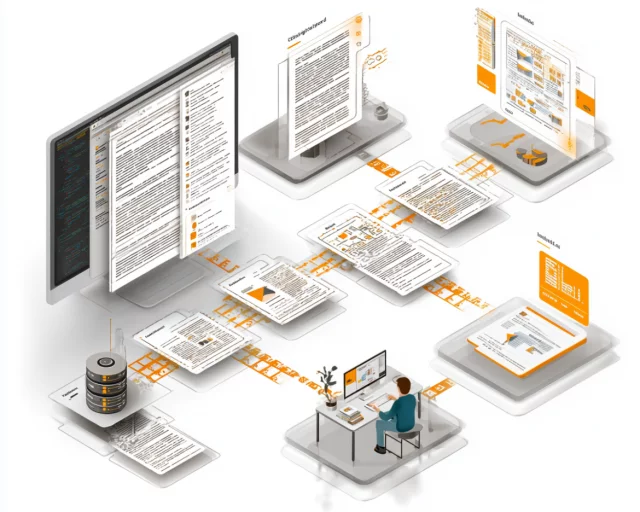
How RAG retrieves internal knowledge, why hallucinations can persist, and what fraud teams should test across context length, unsupported questions and human review.
 Phishing
A future-facing scenario explores how AI agents could be deceived through tools, service identities and trusted inputs, and what that means for fraud controls and auditability.
How Facebook's social graph, inherited trust, public information and advertising reach became tools for fraud, and what financial institutions can learn from that history.
LLM adoption depends on more than capable models: stable integrations, predictable costs, controlled changes and security governance determine whether a demo becomes a dependable service.
Graph visualization and analytics reveal relationships across accounts, devices and transactions. Practical examples show why entity resolution, data quality and careful linking matter.
A 2025 perspective on the Digital Dirham's potential fraud benefits and risks, from transaction traceability and wallet misuse to instant settlement and operational readiness.
How combining rules, machine learning, graph analysis and cross-channel context can improve fraud detection and investigation, with illustrative scenarios and implementation requirements.
How synthetic data can support fraud-model training, rare-scenario testing and collaboration, with practical requirements for realistic generation, validation and governance.
Automation magnifies both useful work and human mistakes. Historical incidents illustrate why speed, connected systems and weak oversight need practical safeguards.
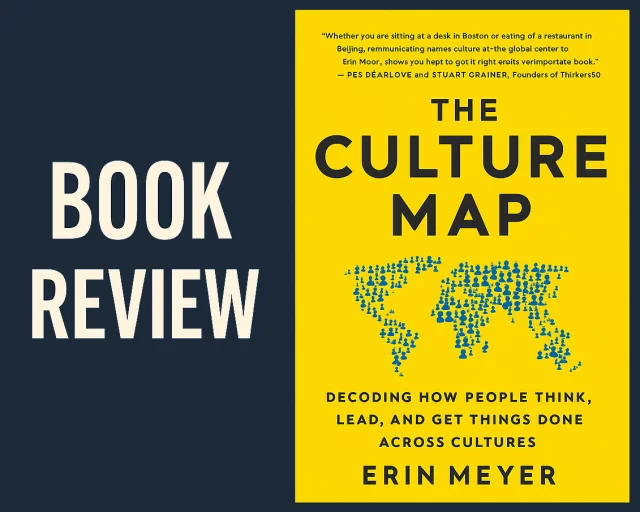
Lessons from Erin Meyer's The Culture Map on communication, trust and cross-cultural work, with personal reflections on Slovakia and the Middle East.
Why fraud implementation needs an engaged executive sponsor and a clearly communicated company-wide priority, illustrated through practical delivery experiences.
The modern fraud fighter needs domain knowledge, data skills, critical thinking and communication, supported by continuous learning that keeps pace with changing threats.
Clarify who owns the requirements and who designs the solution, using maturity assessments, documented priorities and clear responsibilities to reduce implementation scope creep.
Why nobody is outside fraudsters' reach: phishing targets money, information and workplace access, and experience alone does not make anyone immune.
How AI-driven conversations and synthetic voices could scale vishing, and why trusted phone interactions may need stronger verification on both sides.
Give customers control over their fraud exposure through optional restrictions on products, channels and transactions, complementing the bank's detection and authentication controls.
Why an IP address rarely identifies just one person: IPv4, IPv6, NAT, shared networks, VPNs and the limits of IP blocking and geolocation in fraud detection.
Beyond approve and decline: how step-up authentication and hold decisions fit into fraud-risk assessment, message orchestration and analyst workflows.
How device fingerprints combine browser and device characteristics, where they help detect account takeover, and what their accuracy and privacy limits mean for fraud controls.
How phishing evolved from mass email into targeted messages, voice impersonation, misleading domains and AI-generated QR codes, and why awareness remains important.
A personal reflection on 16 years at SAS, from data management and reporting to practical fraud analytics and transaction-network analysis.
Build and refine an ATM-withdrawal fraud rule using time, amount and transaction location, balancing detection and false positives through a worked sample.
Generative AI can help experts work faster, but useful results still depend on asking the right questions, understanding the domain and checking the answers.
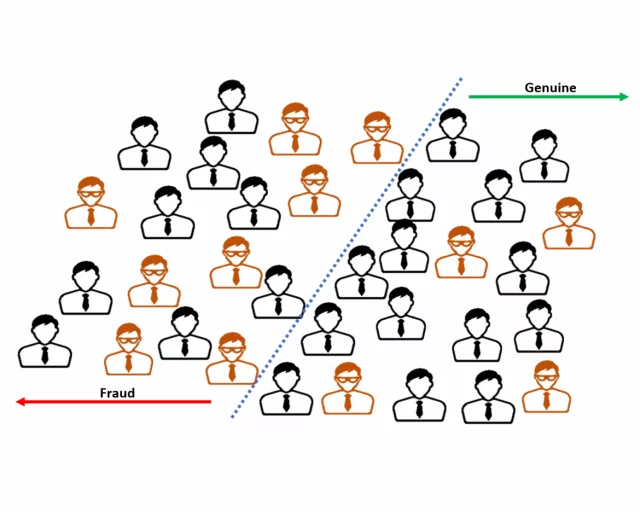
A practical guide to the confusion matrix, precision, recall, false positives and balanced accuracy, showing why fraud detection should never be judged by a single metric.
Why prompts can expose sensitive information, how imitation AI services create phishing risks, and why users and companies need clear rules for sharing data with AI tools.
A perspective on how digital transformation and generative AI widen both business opportunities and fraud risks, and why defenders need to keep learning.
Why a clear minimum viable product, vendor partnership and business-IT alignment can protect a fraud solution's go-live date without losing sight of essential capabilities.
Milo improves his fraud model with transaction sequences, non-financial events, behavioral profiles and third-party data, discovering the work behind useful features.
Milo's first fraud model shows why reliable fraud labels, relevant data and a focused fraud typology matter before adding more features.
How Let's Talk Fraud began: personal experience in fraud prevention, data, analytics and cyber, shared to help others navigate the field.
No articles match your search. Try a different word or topic.